
I absolutely love plein-air painting in watercolour. Basically- painting outside on location. I’ve been doing as much as I can and it’s still just not enough. I should really be doing it today instead of this!
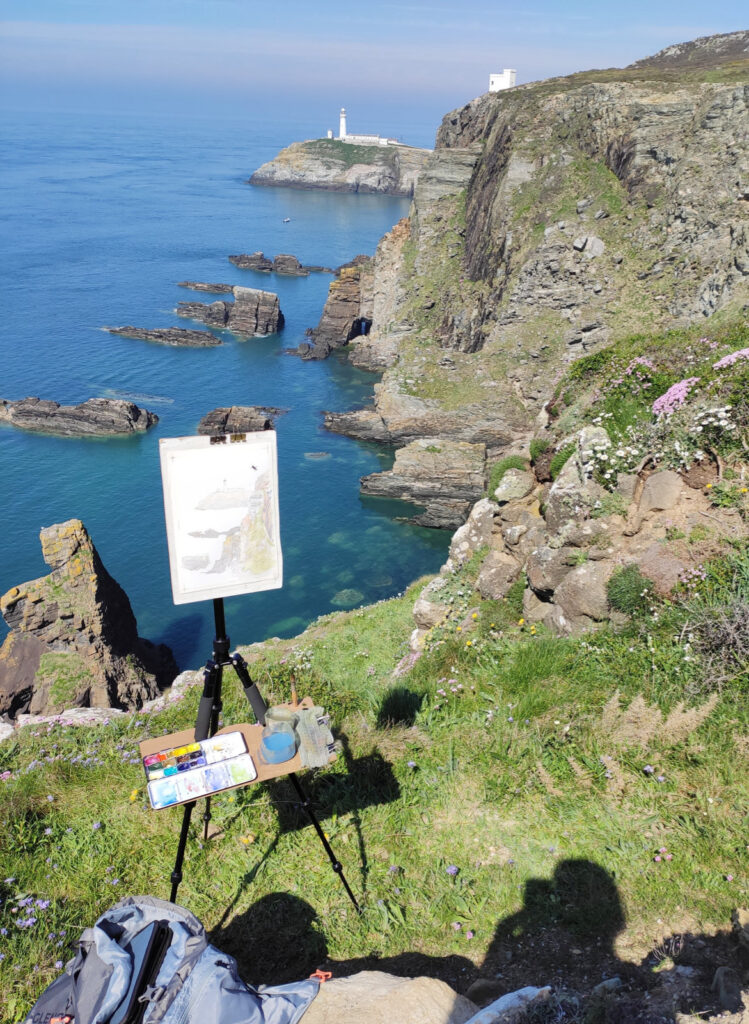
The results are usually not that impressive- my watercolour skills have a long way to go- but the experience of doing it is always worthwhile. When it goes well it can turn a good day into a great day.
I’ve been experimenting with different setups- my current setup is based on James Gurney’s tripod setup but is constantly evolving.
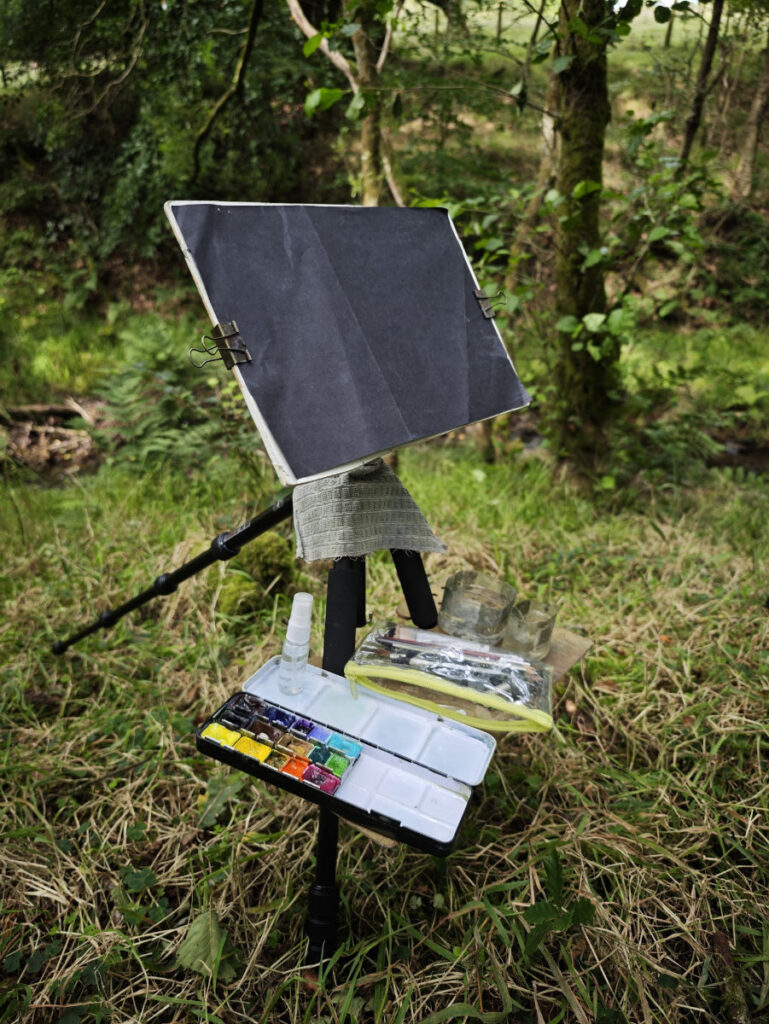
It basically consists of a lightweight tripod- a board screwed onto the tripod’s camera plate, and a small shelf made of some more board that hooks around the legs of the tripod. My water pots (old plastic bottles with a metal hanging bracket glued on) and paint box are clamped onto the shelf with magnets. I also usually clamp a rag on with a bulldog clip, and clamp a piece of scrap paper over my painting surface to protect it before putting it my bag. A small section of camping foam roll makes for a portable seat. The whole lot can be easily packed up into my backpack.
Thus far I haven’t had the courage to paint in any busy places- I prefer the most wilderness-like places I can find! The idea of painting with people looking over my shoulder is not very appealing.
Mistakes made and lessons learned:
Don’t forget your stuff.
This is a big one. If you have a dedicated plein-air bag with everything ready to go- then you’re less likely to leave something important behind.
Choose a suitable subject.
You are not a camera. Don’t try to be one. There’s a place for photorealism, but it’s probably not when you have limited time, minimal shelter and the light is constantly changing! I’ve found that simpler, more graphic subjects tend to come out better.
Do a decent drawing first.
A good drawing makes for a good painting. It’s very tempting to rush to the fun bit with all the swooshy colours, but knowing what things are and where they go saves you a lot of trouble later on.
When I say a “good” drawing- I mean a clear drawing that simplifies the scene and will help you understand where one thing ends and another begins.
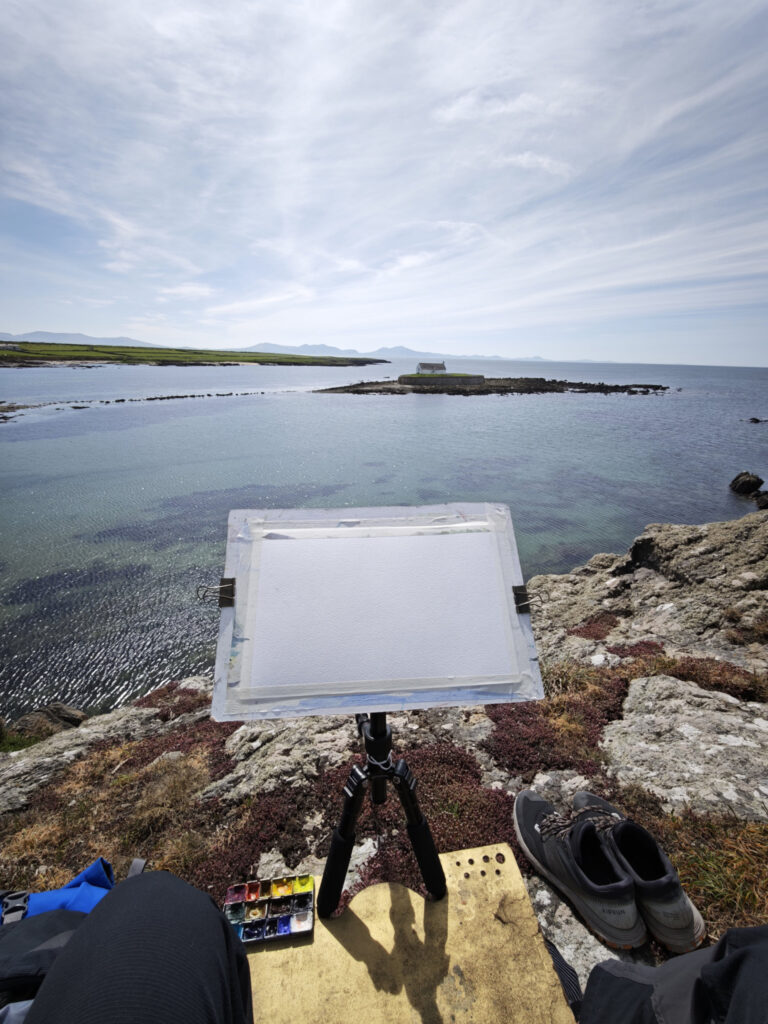
Prepare for the conditions!
Kind of obvious, I know. It will probably surprise no one to find out that the final artwork is often better when your fingers don’t hurt from the cold, and shivering is preventing you from making any accurate marks. On the other hand- blinding direct sunlight doesn’t make things easy either.
Then there’s the insects! Not only do mosquitoes, ticks and horseflies love the taste of plein air painters, but every other insect seems to enjoy sitting on the bright white, often damp, surface of your painting.
A few extra common sense items solve most problems:
- Season appropriate clothing- often including gloves and hat.
- Sun cream.
- Insect repellent.
These are just a few thoughts I have for now. No doubt there will be more later…