General Wisdom for Artists in 2025

I first started these General Wisdom for Artists posts over ten years ago! Analytics tells me that people have actually been reading them!

Perhaps this is too personal, too abstract, too disparate. I don’t know. I’m writing it to get my thoughts in order as much as to help others. Here we go:

Fluency

There exists a type of learning that can only be built up through repeated doing. Sounds obvious, I know. But the point is that all these blog posts and art tips are only a skeleton upon which the muscle and sinew of actual experience must grow! I call this type of learning “Fluency”.

In the same way you can learn a new language and become fluent- so too can you learn the fundamental principles of art and become fluent in each of them. Think of it this way- you can speak a new language by consulting a phrase book, or you can become fluent in it. It’s the difference between book-learning and true understanding.

You don’t know what you don’t know.

Supposing you recorded your workflow for a few different pieces and put them on youtube. Then you watched it back, maybe comparing your approach to other artists. You’d be struck by the particular patterns you follow and the particular ways you do things. You might also notice a few repeated mistakes.

You have a method, skillset and strengths that you probably haven’t articulated to yourself before. It’s to your benefit to understand these. You don’t know what you don’t know, and tackling your blind spots will make you a better artist.

This connects somewhat with the fluency idea expressed above- because sometimes you can be fluent in doing things wrong! Having looked over some of my recent artwork I know that messing up perspective and tonal values comes to me as easily as riding a bike. I thought I had these things sussed out years ago. It’s something I have to work on I suppose.

Enthusiasm

I haven’t done much digital work for myself in recent years. I used to fill sketchbooks, digital and traditional- and even that has stopped. Life has had ups and downs- and the art “industry” is currently in middle of an existential crisis with generative AI. Or maybe it isn’t- who can say? Personally I don’t know what to think anymore.

It’s a strange time to be a digital artist. We’re sort of still useful, but who knows how long for? I’ve painted book covers for clients who originally used generative AI- but found that the results turned people off by being too artificial- too obviously AI. I occasionally get given AI references that are better than I could ever paint and get asked to recreate it.

I’m rambling a bit but the point is that it’s hard to devote myself to something that used to have such obvious value, and now might not. Should I be re-training as a plumber right now?

The one consistent joy for me has been plein air painting- which might be less about the art and more about the act of getting out into the world and doing something purely for the hell of it. Do what you love, right?
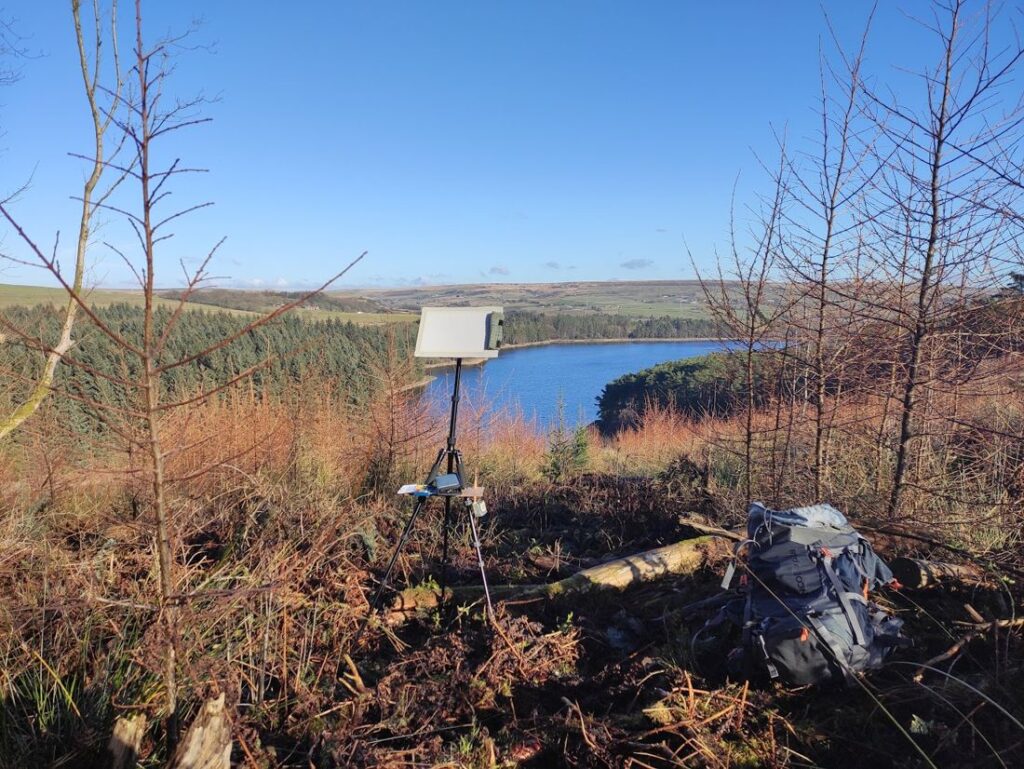
It’s almost always worthwhile to leave the house.

Some final scattered thoughts

Present your work nicely. Consistency is key. I rarely follow my own advice on this one.

Automate unimportant decisions. Life’s to short to spend lots of time on the minor things.

Finish what you start. I’ve been prone to making lots of little incomplete drawings and paintings over the years, and none of them are good enough enough to show to anyone, but also not original or interesting enough to satisfy myself!

Don’t skimp on hardware- I bought an Ipad pro in 2021 and have used it every day since. It was expensive, but it’s been worth it. The lenovo tablet I bought just a couple of years earlier has mainly sat in a drawer because it’s terrible. The price difference wasn’t even that much!

That’s it for another few years I think.
Watercolour en plein air

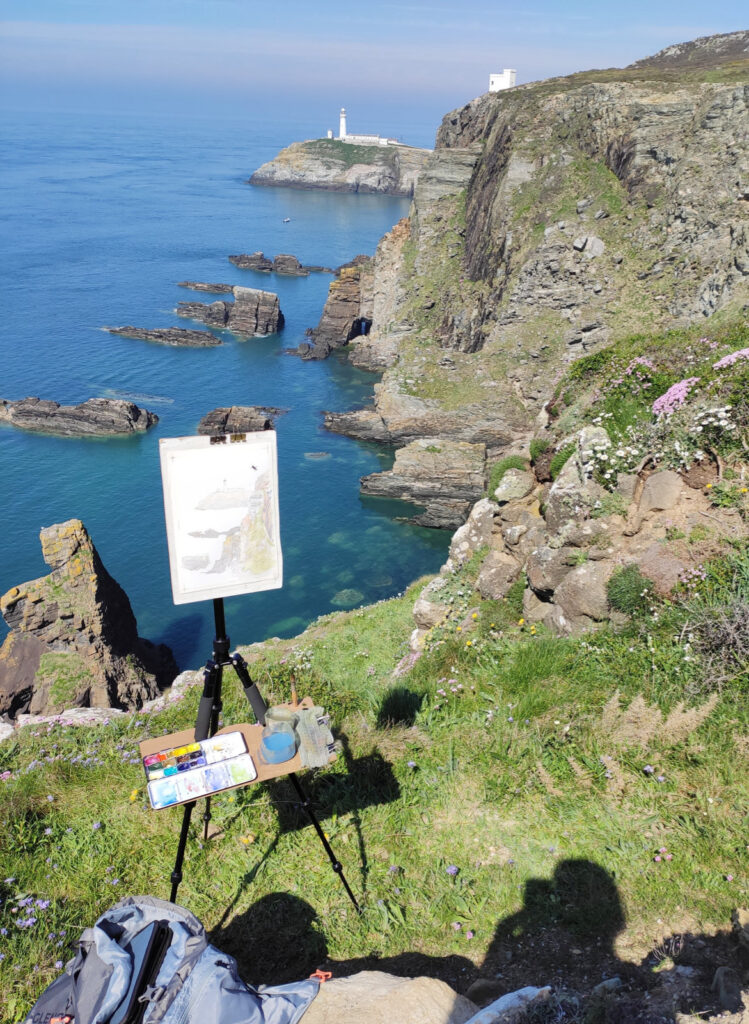
I absolutely love plein-air painting in watercolour. Basically- painting outside on location. I’ve been doing as much as I can and it’s still just not enough. I should really be doing it today instead of this!

A beautiful spot near South Stack lighthouse, Anglesey.

The results are usually not that impressive- my watercolour skills have a long way to go- but the experience of doing it is always worthwhile. When it goes well it can turn a good day into a great day.

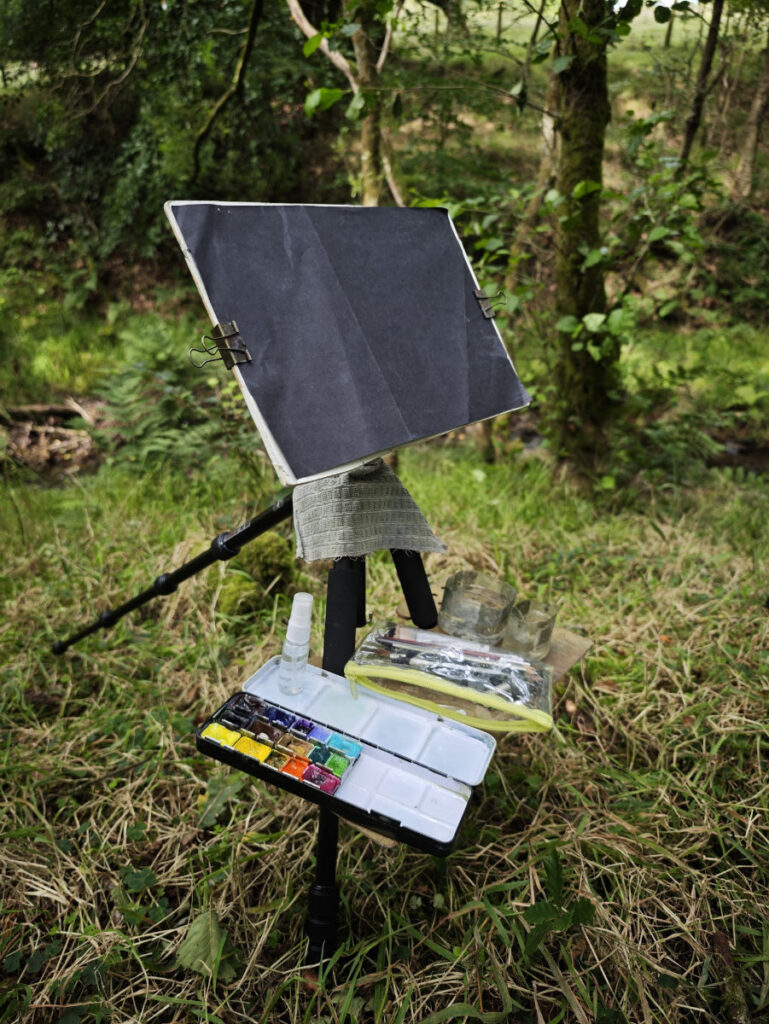
I’ve been experimenting with different setups- my current setup is based on James Gurney’s tripod setup but is constantly evolving.

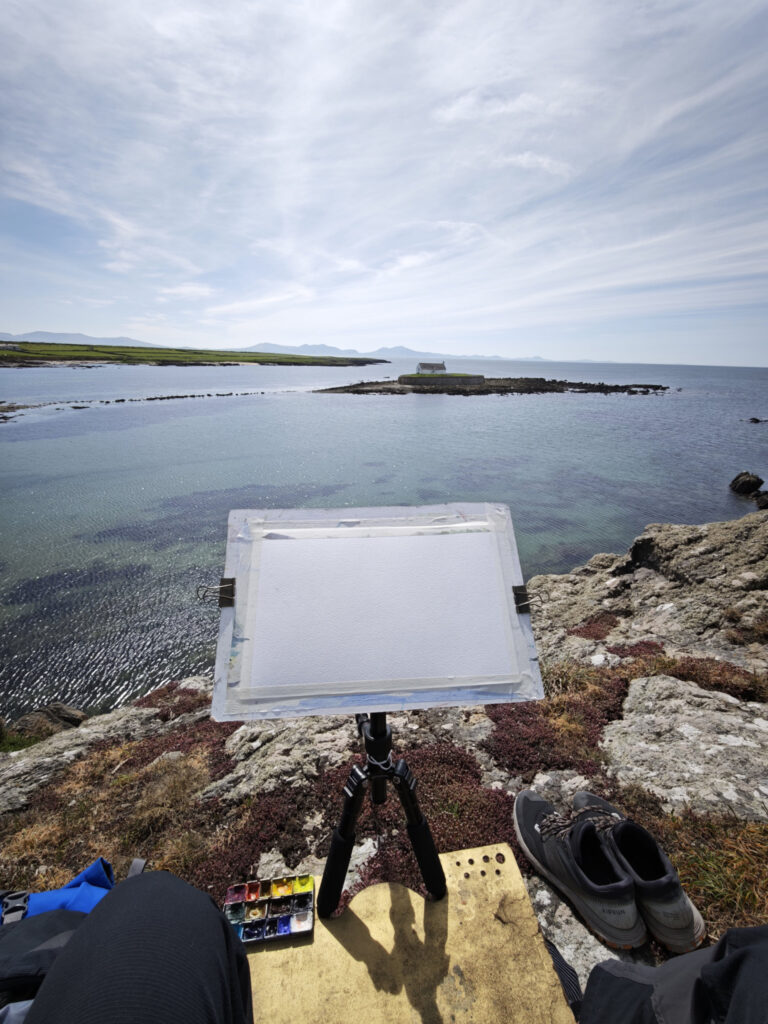
It basically consists of a lightweight tripod- a board screwed onto the tripod’s camera plate, and a small shelf made of some more board that hooks around the legs of the tripod. My water pots (old plastic bottles with a metal hanging bracket glued on) and paint box are clamped onto the shelf with magnets. I also usually clamp a rag on with a bulldog clip, and clamp a piece of scrap paper over my painting surface to protect it before putting it my bag. A small section of camping foam roll makes for a portable seat. The whole lot can be easily packed up into my backpack.

Thus far I haven’t had the courage to paint in any busy places- I prefer the most wilderness-like places I can find! The idea of painting with people looking over my shoulder is not very appealing.

Mistakes made and lessons learned:

Don’t forget your stuff.

This is a big one. If you have a dedicated plein-air bag with everything ready to go- then you’re less likely to leave something important behind.

Choose a suitable subject.

You are not a camera. Don’t try to be one. There’s a place for photorealism, but it’s probably not when you have limited time, minimal shelter and the light is constantly changing! I’ve found that simpler, more graphic subjects tend to come out better.

Do a decent drawing first.

A good drawing makes for a good painting. It’s very tempting to rush to the fun bit with all the swooshy colours, but knowing what things are and where they go saves you a lot of trouble later on.

When I say a “good” drawing- I mean a clear drawing that simplifies the scene and will help you understand where one thing ends and another begins.

Eglwys Cwyfan, Anglesey. Top tip: take your shoes off to feel more at home anywhere.

Prepare for the conditions!

Kind of obvious, I know. It will probably surprise no one to find out that the final artwork is often better when your fingers don’t hurt from the cold, and shivering is preventing you from making any accurate marks. On the other hand- blinding direct sunlight doesn’t make things easy either.

Then there’s the insects! Not only do mosquitoes, ticks and horseflies love the taste of plein air painters, but every other insect seems to enjoy sitting on the bright white, often damp, surface of your painting.

A few extra common sense items solve most problems:

  • Season appropriate clothing- often including gloves and hat.
  • Sun cream.
  • Insect repellent.

General wisdom for artists No.3

3. Warm up first

Do you ever forget how to use a tool properly or is that just me? I’m not kidding you know. If you’ve been working in one medium for a long time and you find yourself one day deciding to use another, you may realise too late that you’ve become a little rusty with it. If you happen to have dived into an important piece and realise part way into that it’s rubbish because you’re using the brush like a spanner (so to speak) then you may become disheartened and go off in a sulk to do something else. Worse yet, you can then become scared of using that medium again since your most recent failure is the thing you most strongly remember.

This happened to me recently with oil paints. I hadn’t done any oil painting for a year or so until several days ago when I mangled a canvas by treating the paint like it was digital. This could all have been avoided with some relaxing warm up doodles or paintings where I refreshed my understanding of the strengths and limitations of oil painting.

Whatever it is that you do, its best to do a little warm up session before you attempt your magnum opus. This doesn’t just apply to knowledge of media, it also applies to knowledge of stuff like anatomy and lighting. If you’re in the business of figure drawing, then why not draw a few rough gesture drawings first? On top of the fact that you can refresh your knowledge this way, it also helps you get into the right mood for the important stuff. Just be careful that you don’t spend too long warming up and expend all your creative energy before you get down to the important stuff.

Whatever it is you mean to achieve today, do a few scribbles first!

General wisdom for artists No.2

2. Sit up straight!

Sometimes in our quest to further our artistic ambitions we may find ourselves succumbing (god forbid) to laziness. Sometimes we may find ourselves succumbing to laziness to such a degree that we get nothing done. Therefore it stands to reason that if we want to become the best artists we can be then we need to keep laziness at bay!

So, having your best interests at heart as I do, I’ve listed here a number of things you can do to keep going that little bit longer. After all, finishing before you should only disappoints people.

1. Sit up straight.
This one is hard but important. If you slouch about like a wilting lettuce leaf and get too comfortable you may find yourself getting drowsy and lethargic. This makes it only too tempting to take a break or to “switch off” and not concentrate on what you’re doing. The solution is simple in theory but hard to maintain for those of us with all the poise and posture of a sandbag.

2. Don’t drink caffeine, or too much of it anyway.
Caffeine is all very well when you need a little pep up in the morning, so long as you don’t let it get out of hand! If you get to the stage where every time you feel you need to concentrate then you require a strong cuppa, I fear you may have a bad habit. It’s a common enough habit among creatives and other people who spend most of their time in chairs to have 18 coffees a day, but it’s a bad habit all the same. Reliance upon caffeine means that all the time you aren’t riding that caffeine high you’re probably feeling knackered and craving caffeine instead. Humans already need to stop feeling good when we’re hungry, thirsty or in the thrall of other niggling bodily demands, so why add another thing you need to the list?

3. No booze/drugs before/during working.
I’m worried that this one might be a little too obvious. Continuing in the same vein as the last tip, anything that makes you tired, lazy, stupid or constantly in need of the toilet is probably not in your best interests. This of course is all “in an ideal world”. While I’m here giving lifestyle advice I may as well say eat healthy, exercise regularly, cease staying up all night watching stupid videos on YouTube and all that other stuff I myself should probably be doing.

4. Be aware of the temperature and lighting in your workspace.
You know when you were at school in one of those lessons where it was too warm and the room was lit by a few dull orangey fluorescent tube lights and you couldn’t help but feel incredibly sleepy and not at all interested in William bloody Shakespeare? Well you don’t want your work environment to be like that for obvious reasons.

5. Find your hidden glass of water
Yes I know that I said that having too much water was a bad thing in the last last post, but in moderation it’s a good thing. Also a little sip of some cold clear water will do wonders for helping you feel a bit more awake.

Now, since every post should have a picture or two, here’s something unrelated I made earlier: