General Wisdom for Artists in 2025

I first started these General Wisdom for Artists posts over ten years ago! Analytics tells me that people have actually been reading them!

Perhaps this is too personal, too abstract, too disparate. I don’t know. I’m writing it to get my thoughts in order as much as to help others. Here we go:

Fluency

There exists a type of learning that can only be built up through repeated doing. Sounds obvious, I know. But the point is that all these blog posts and art tips are only a skeleton upon which the muscle and sinew of actual experience must grow! I call this type of learning “Fluency”.

In the same way you can learn a new language and become fluent- so too can you learn the fundamental principles of art and become fluent in each of them. Think of it this way- you can speak a new language by consulting a phrase book, or you can become fluent in it. It’s the difference between book-learning and true understanding.

You don’t know what you don’t know.

Supposing you recorded your workflow for a few different pieces and put them on youtube. Then you watched it back, maybe comparing your approach to other artists. You’d be struck by the particular patterns you follow and the particular ways you do things. You might also notice a few repeated mistakes.

You have a method, skillset and strengths that you probably haven’t articulated to yourself before. It’s to your benefit to understand these. You don’t know what you don’t know, and tackling your blind spots will make you a better artist.

This connects somewhat with the fluency idea expressed above- because sometimes you can be fluent in doing things wrong! Having looked over some of my recent artwork I know that messing up perspective and tonal values comes to me as easily as riding a bike. I thought I had these things sussed out years ago. It’s something I have to work on I suppose.

Enthusiasm

I haven’t done much digital work for myself in recent years. I used to fill sketchbooks, digital and traditional- and even that has stopped. Life has had ups and downs- and the art “industry” is currently in middle of an existential crisis with generative AI. Or maybe it isn’t- who can say? Personally I don’t know what to think anymore.

It’s a strange time to be a digital artist. We’re sort of still useful, but who knows how long for? I’ve painted book covers for clients who originally used generative AI- but found that the results turned people off by being too artificial- too obviously AI. I occasionally get given AI references that are better than I could ever paint and get asked to recreate it.

I’m rambling a bit but the point is that it’s hard to devote myself to something that used to have such obvious value, and now might not. Should I be re-training as a plumber right now?

The one consistent joy for me has been plein air painting- which might be less about the art and more about the act of getting out into the world and doing something purely for the hell of it. Do what you love, right?
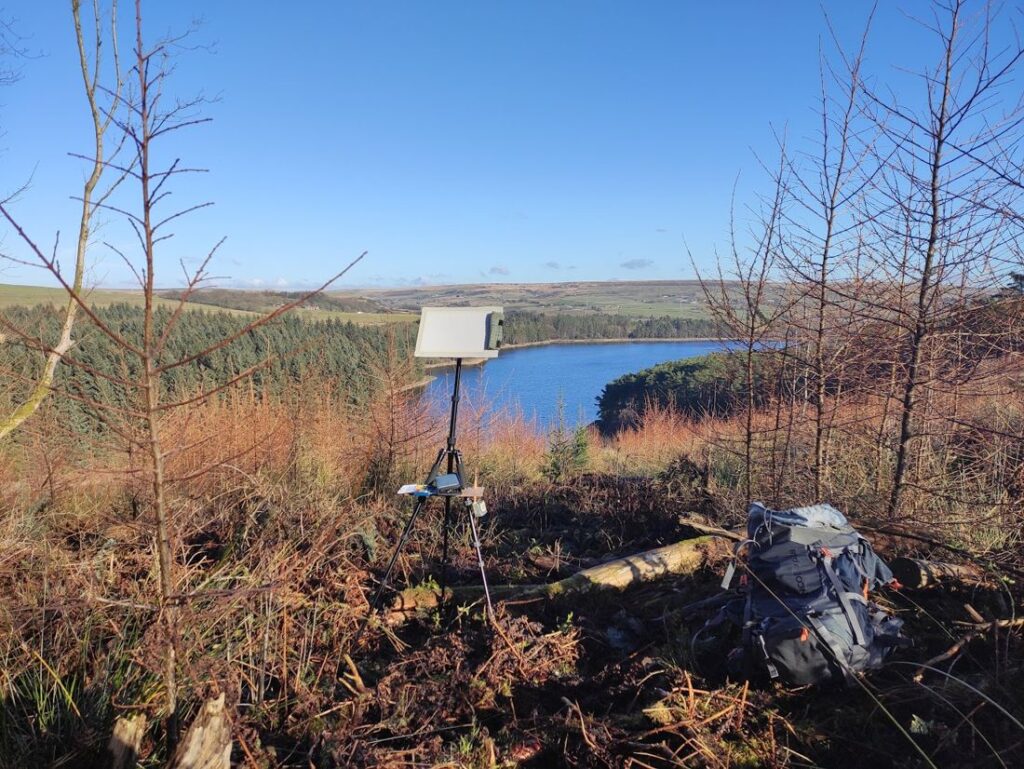
It’s almost always worthwhile to leave the house.

Some final scattered thoughts

Present your work nicely. Consistency is key. I rarely follow my own advice on this one.

Automate unimportant decisions. Life’s to short to spend lots of time on the minor things.

Finish what you start. I’ve been prone to making lots of little incomplete drawings and paintings over the years, and none of them are good enough enough to show to anyone, but also not original or interesting enough to satisfy myself!

Don’t skimp on hardware- I bought an Ipad pro in 2021 and have used it every day since. It was expensive, but it’s been worth it. The lenovo tablet I bought just a couple of years earlier has mainly sat in a drawer because it’s terrible. The price difference wasn’t even that much!

That’s it for another few years I think.

General wisdom for artists No. 08

According to google analytics people are still reading these “General Wisdom for artists” posts. Alarmed by this- I’ve been back and read them again to see what bollocks I was sprouting several years ago to make me cringe in the present.

My current advice to anyone who reads this now is as follows: Relax. Enjoy life. Whatever you’ve done lately is fine. Be nice to people. All that Carpe Diem crap? It’s to make you spend money. We all die in the end. Enjoy the sunshine, and don’t take indiscriminate advice from blogs- You never know which idiot has written them.

I’m still working it all out of course. I might have some real hot tips later…

General Wisdom for artists No. 7

7. Get away from the computer!

I can haz things I should be doing

I’m typing this up on a computer. I ought to admit that straight away, you’re reading this on a computer too, unless you printed it out, which I know you didn’t!

Computers are great, everyone knows that. If it wasn’t for the digital age I wouldn’t be the artist I am today. I’d probably be doing some menial job I hate because I lacked the knowledge and the drive to follow my self-indulgent dreams. The internet told me how to be an illustrator and Photoshop allowed me to undo my mistakes, posting my work online has allowed me to work for people who value what I do.

Our lives would be considerably worse without computers. Obviously there’s the helicopter game, that’s good, there’s twitter supposedly causing the Arab spring uprising and Google maps helping Al Qaeda militants coordinate attacks and there’s lolcats and solitaire and all the other things making everyone’s lives immeasurably better.

So I don’t want to appear hysterical with this- but if you want to get things done you need to get away from the computer.

At least for the planning stages. Anything you can do just fine without a computer, you should. A good old pencil and sketchbook is perfect for getting down and refining ideas before you ever need to do any digital work.

You’ve probably heard this before, it’s not revolutionary information, but I thought I could say the same thing everyone else has been saying and once you’ve read it enough it may just sink it.

It’s precisely the same reasons that computers make us happy that they also hinder our plans and consequently make us unhappy in the long term. There’s just too many possibilities, too many directions we can inadvertently move away from what we started off doing. Because we rely on our computers to do everything from playing music, watching films and chatting with friends it becomes extremely difficult to maintain focus on our work- which is is vital for artist and especially for freelancers.

Facebook is the obvious example of contemporary digital time wasting. It’s a site full of tripe with links to more tripe. You can go on there for just a second with the aim of checking to see if someone has replied to a message and find yourself spirited away to some faraway website you don’t really care about.

In much the same way that if you click on any of the links I included above then you won’t ever finish reading this I imagine, you’ll be too busy giggling at cats. In fact, I expect the majority of people who see this post will never reach the bottom, they might mean to “read it later” but they wont. I wouldn’t.

But Facebook is only the most commonly vilified of time-wasting methods. Facebook is designed to distract so it can generate ad revenue, and conveniently enough we humans actively seek distraction! We don’t even need social media sites to do that.

Just think of all the things your fancy modern computer can do. How many of them are what you actually want to get done today? 

Just be aware that when you’ve been working on something a while, something meaningful and valuable perhaps- your brain will start seeking distraction, just a little break, and all the shiny icons on your screen will start to look oh so tempting!

Maybe not facebook, or twitter or even tumblr this time- maybe you’ll just check the news, that won’t take long right? But just think how even clicking the internet browser opens up all the different possibilities to be distracted. Supposing like mine your browser is covered with links to all your favourite pages- which you can see instantly with a single click- but you ignore them all to just quickly glance at BBC news? You spend ten minutes reading articles you’ll have forgotten about in a day or two, and then you wonder whether people are talking about this news article on facebook? Or maybe you could load up your instant messenger program and talk to a friend instead? Or maybe since you’re having a break and you’ve lost your focus you may as well play a video game?

I could go, but I’m just wasting your time as well really. if you’ve read this far, congratulations! Such focus! You must be over 30 at least.

The long and short of it all is this: use your computer when you need to use it for working, or when you allow yourself dedicated time to relax, but always be aware that because it’s so easy to NOT work- your brain will probably manage it.

Because we can’t afford a computer and a room for every task, here’s a few tips to get the most productivity out of your multi-task distraction-box.

  1. Have web browsers closed whenever possible.
  2. Consider making a new account on that doesn’t have access to games or things you don’t need.
  3. Unplug/disconnect from the internet so it becomes more effort to use it.
  4. Be aware that not all time is equal- If you play first you’ll not have then energy to work later- playing is easier than working.
  5. Get as far as you can with your work using analogue means- trust me, sketch books are the future!

General Wisdom for Artists No. 6

6. Strive to learn stuff outside your own discipline.

Scientists say that new and original ideas are the product of new pathways forming in the brain, like a join the dots picture of sorts, but with an almost infinite number of pictures hidden within. If you have a lot of dots to draw lines between then you can make a lot more pictures!

That’s perhaps a rather simplistic metaphor for cutting-edge cognitive science, but nonetheless it does hold true. If you have a number of different interests and sources of inspiration to draw from, your art will be that much richer and more personal to you. This is really important. There’s lots of artwork out there, and much of it is so similar to other things we’ve seen before that we just skip over it in search of the original stuff.

On top of this, learning principles in one discipline may transfer surprisingly well to another discipline. I’ve recently started trying to teach myself 3d art. It’s quite a steep learning curve, but I’ve found that a lot of knowledge from my 2d digital work transfers exactly into 3d, which has given me a considerable advantage over those starting without any knowledge of digital art at all. This new knowledge of 3d art benefits my 2d artwork as well. Being able to create 3d models and apply different lighting conditions to them gives me a great source of rudimentary reference for anything I want to draw from difficult angles or in unusual lighting.

Another example might be photography. A good understanding of how light reacts through a lens and how to compose a cinematic shot through a camera can only benefit you when composing a picture with a paintbrush. Even if whatever else it is you choose to do doesn’t help your art so directly, it will help if you ever have to draw, paint or write about it!

Having multiple projects or interests in different disciplines also stops you from getting bored doing the same thing all the time. If you’re fed up drawing for the day, you can always go snowboarding and practice some flips. (I’ve got a niggling but baseless certainty that skill in snowboarding benefits skill in drawing. Sadly I’ve never been snowboarding, so have yet to prove it.)

Basically, the more things’ you’ve tried, the more ways of thinking about things are open to you, and the more informed your artwork will be. It’s a no-lose situation right?

Incidentally, here’s some of my first attempts at proper 3d art: (I don’t count google sketchup as proper 3d)

3d1 3d2

These were done in blender, which is an excellent and importantly free program which you can download here: http://www.blender.org/download/get-blender/

I’d encourage other artists to get it just for the sculpting features, which allow you to quickly sculpt all sorts of things. I find it’s a very good test of one’s anatomy knowledge. I was doing cheeks wrong.